
Sugar, Carbohydrates and Diabetes: What You Really Need to Know
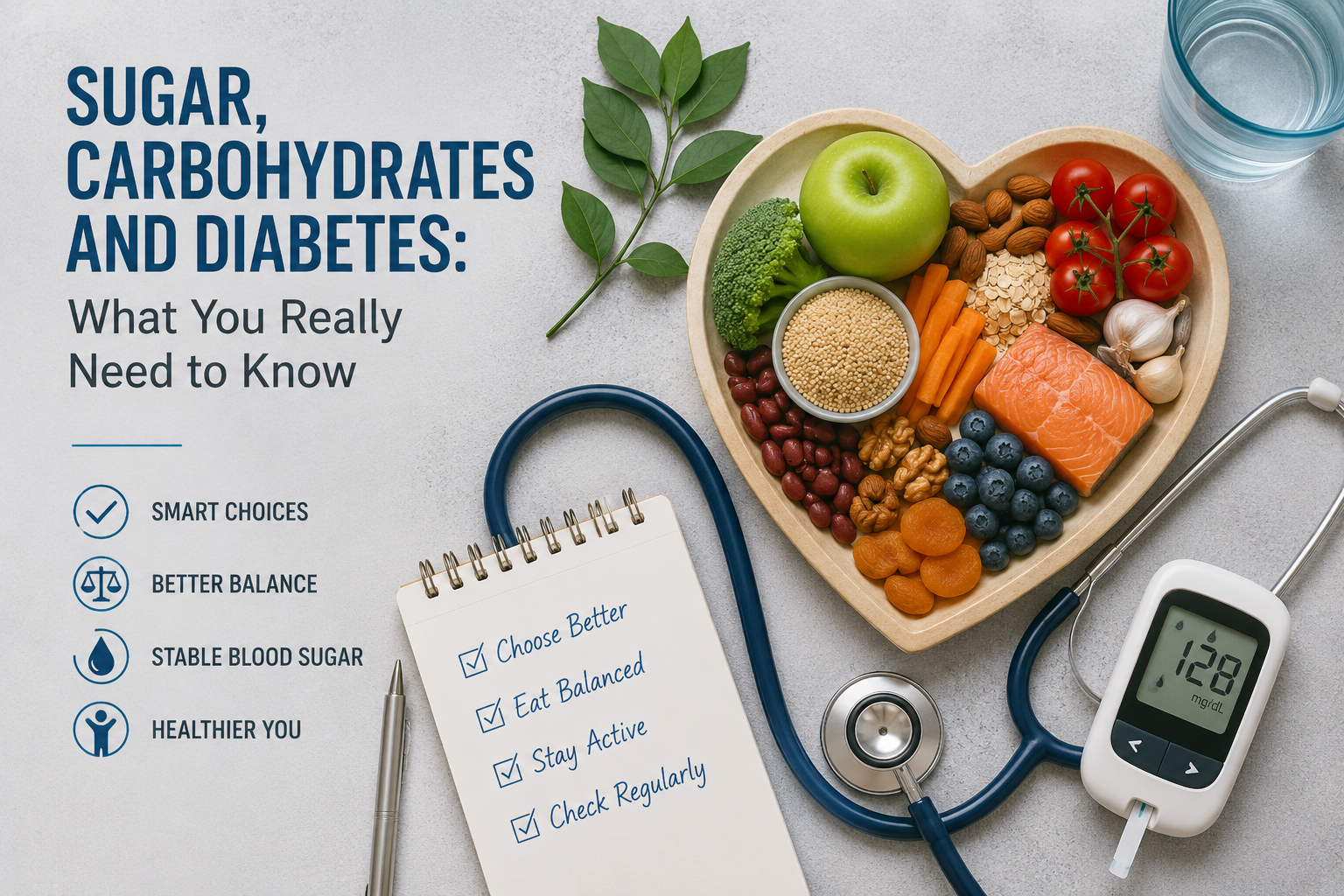
Understanding sugar and carbohydrates can feel overwhelming after a diabetes or prediabetes diagnosis. Many people think they must stop all carbs completely—but this is not true.
Modern diabetes care focuses on balance, portion control, and smarter food choices rather than strict restrictions.
What is the role of sugar and carbohydrates in diabetes?
Carbohydrates are the main nutrients that affect blood glucose levels. When you eat carbs, your body breaks them down into glucose (sugar), which enters the bloodstream.
Carbohydrates include:
- Sugar (sweets, desserts, sugary drinks)
- Starches (rice, bread, pasta, potatoes)
- Natural carbs (fruits, milk, legumes)
Not all carbohydrates behave the same way in the body.
Why it happens / Key causes
Blood sugar rises differently depending on the type and quality of carbohydrates. Key factors include:
- Refined vs whole carbs (white bread vs whole grains)
- Fiber content (low fiber = faster sugar rise)
- Processing level (processed foods spike glucose faster)
- Portion size (large portions raise sugar more)
- Food combinations (carbs eaten alone vs with protein/fat)
Refined carbohydrates like:
- White bread
- White rice
- Bakery items
- Sugary drinks
can raise blood sugar quickly—sometimes similar to sugar itself.
Common signs or challenges
Many people experience:
- Confusion about what to eat
- Fear of eating carbs
- Sudden spikes in blood sugar
- Cravings after strict restriction
- Difficulty maintaining long-term diet plans
Over-restricting foods can often lead to frustration and inconsistent eating habits.
Practical tips / Management
Instead of avoiding all carbs, focus on smarter choices and balance:
1. Choose better carbohydrates
- Prefer whole grains, lentils, and vegetables
- Include beans, chickpeas, and seeds
- Choose fruit in controlled portions
2. Increase fiber intake
Fiber slows down sugar absorption:
- Add vegetables to every meal
- Include salads, legumes, and whole foods
- Keep fruit with skin where suitable
3. Combine foods wisely
Avoid eating carbs alone. Pair them with:
- Protein (eggs, yogurt, paneer, lentils)
- Healthy fats (nuts, seeds)
Examples:
- Rice + dal + vegetables
- Fruit + yogurt
- Toast + eggs
4. Control portion sizes
- Use a balanced plate method
- Fill half the plate with vegetables
- Keep carb portions moderate
- Add a source of protein
5. Limit high-sugar and refined foods
Reduce:
- Sugary drinks
- Sweets and desserts
- Processed snacks
- Refined flour products
6. Follow a consistent eating pattern
- Avoid skipping meals
- Eat at regular times
- Keep meals balanced
7. Allow flexibility
- Small portions of sweets can be included occasionally
- Focus on overall daily balance rather than perfection
When to seek medical advice
Consult your doctor or diabetes educator if:
- Blood sugar levels remain consistently high
- You feel unsure about what to eat
- You experience frequent highs or lows
- You are newly diagnosed with diabetes or prediabetes
- You need a personalised meal plan
Written & reviewed by Vandana Gupta
Credentialled Diabetes Educator (Australia) | Lifestyle Medicine Consultant | Research Contributor
Vandana shares evidence-based health information drawn from trusted sources including the Royal Australian College of General Practitioners (RACGP), the American Diabetes Association (ADA), and global public health guidelines—simplified for everyday understanding.
Disclaimer:
This information is for educational purposes only and does not replace professional medical advice, diagnosis, or treatment. Always consult a qualified healthcare provider regarding any medical condition or before making health decisions.